From a Backyard Cherry Tree to a Thriving Community Camp
How two high school students, supported by an entire community, grew CACA STEM & Humanities Summer Camp from nine campers to ninety in just three years
In the summer of 2024, Beikun and Oscar, two high school students with an idea and a willingness to try, launched the first CACA STEM & Humanities Summer Camp from Beikun’s home.
The program was modest. Two friends joined them as teaching assistants, and the camp offered just two courses: Introduction to Python and Greek Mythology & Percy Jackson.
They recruited within their school district, posted flyers around nearby neighborhoods, and hoped families would take a chance on an academic summer camp designed and taught by high school students.
That first summer, nine students enrolled.
It was a small beginning—but an important one.
Within just a few days, parents began noticing the energy, preparation, and academic strength the student instructors brought into the classroom. By the second day of camp, one parent was already asking whether another child in the family could join.
More importantly, the first summer helped establish the philosophy that continues to shape the camp today: serious learning, joyful exploration, and a strong sense of community belong together.
Where Learning and Summer Belong Together
From the beginning, Beikun and Oscar wanted the camp to be academically meaningful without losing the spirit of summer.
Strong STEM and humanities courses became the foundation of the program. At the same time, students were given plenty of opportunities to play, create, explore, and simply enjoy being together.
In 2024, many of the enrichment activities were led by their neighbors and friends. Between classes, campers headed outside for badminton and water games, and sometimes even picked cherries from the backyard tree.
Fresh fruit and snacks were always available.
The program was simple, personal, and small—but families responded with overwhelmingly positive feedback. That encouragement gave the student leadership team the confidence to build something bigger.
Growing Beyond the Living Room
In 2025, the camp entered a new chapter.
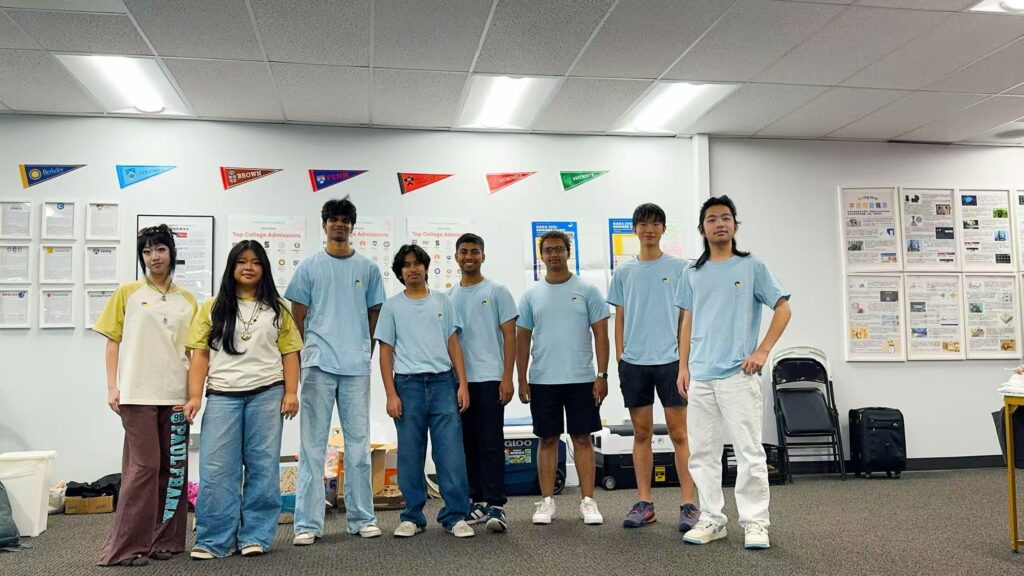
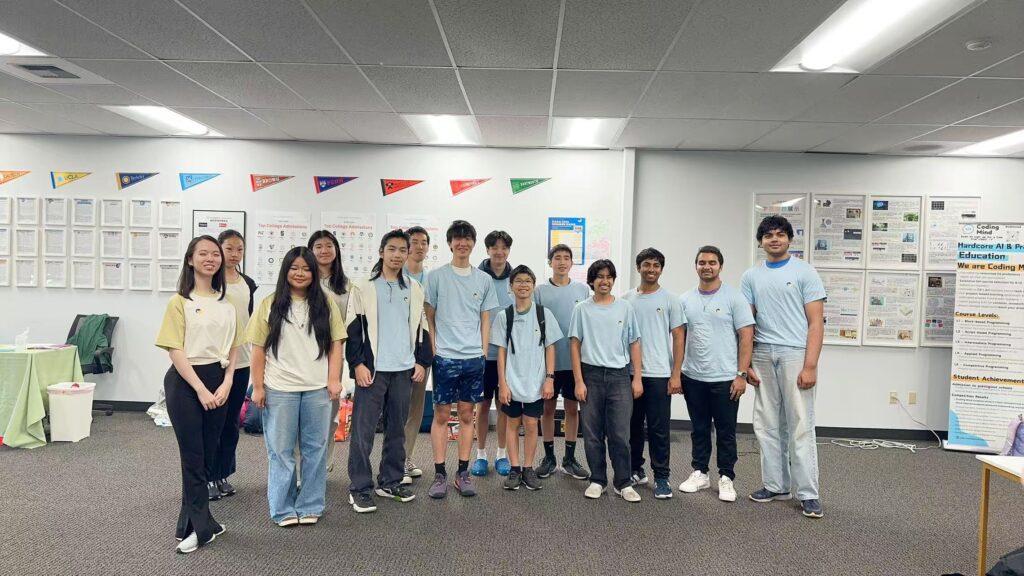
With classroom space provided through Coding Mind, Beikun and Oscar were able to expand both the teaching team and the curriculum. The camp grew to 16 high school teachers and teaching assistants, creating a diverse instructional team representing multiple cultural and ethnic backgrounds.
The trust built during the first summer also began to spread throughout the community.
Enrollment increased from nine students in 2024 to 70 students across three weeks in 2025.
The academic program expanded well beyond its original two courses to include computer programming, science, competitive mathematics, history, public speaking, and writing.
But growth was not only about adding more classes.
The camp began developing a broader community partnership model, inviting college students to offer special masterclasses. These sessions introduced younger students to academic fields and showed them how subjects studied in school connect with real-world careers, research, and problem-solving.
For many campers, meeting college students only a few years ahead of them offered something especially valuable: a relatable glimpse of what their own futures could look like.
Community members also stepped forward to share their own expertise and passions. Campers explored music composition, martial arts, Peking Opera, Tai Chi, arts and crafts, a life-sized Monopoly game, and many other creative activities.
Together, these experiences transformed the camp into something larger than a collection of classes. It became a place where students could discover new interests, meet role models, build friendships, and enjoy learning in many different forms.
CACA provided strong organizational support as well, allocating funds for ice cream, fruit, and a wide variety of safe snacks. Every Friday, all campers, teachers, and teaching assistants were treated to pizza and hot dogs—another small tradition that helped create the warm, welcoming atmosphere families came to value.
A Community Tradition Takes Shape
By the summer of 2026, the camp had grown again.
Over three weeks, 19 high school teachers and teaching assistants contributed to the program, and total enrollment reached 90 students.
One number was especially meaningful to the leadership team: more than 43% of students from the 2025 camp returned in 2026.
Many returning campers brought friends with them.
For a program that began with families taking a chance on two high school students teaching in a living room, that level of return reflected something deeper than enrollment growth. It showed that students wanted to come back—and that families trusted the community that had formed around the camp.
The 2026 program continued its tradition of community collaboration while also evolving with the world around it.
New artificial intelligence courses were introduced, giving students an opportunity to explore one of the most rapidly changing areas of technology. Leaders from the AI industry were invited to visit the camp and demonstrate how emerging tools can create images and videos from simple spoken or written prompts.
Just as previous masterclasses had connected classroom subjects to the real world, these sessions helped students experience firsthand how quickly technology is changing—and encouraged them to think not only about how to use new tools, but also about what they might someday create themselves.
From 9 Campers to 90
In just three summers, CACA STEM & Humanities Summer Camp grew from 9 students to 90, while its student teaching team expanded to nearly five times its original size.
Yet the most meaningful measure of the camp has never been growth alone.
Throughout these three years, the program has been shaped by the commitment of high school students willing to teach, lead, plan, solve problems, and take responsibility for younger members of their community.
It has also been shaped by parents who trusted them, students who returned year after year, organizations that provided resources, and community members who generously volunteered their time and expertise.
The consistently positive feedback from campers and families has been a powerful reminder that young people are capable of building something meaningful when a community is willing to believe in them.
With Gratitude to Our Community
CACA STEM & Humanities Summer Camp would not have grown into what it is today without the generosity of many organizations and individuals.
We extend our sincere appreciation to Coding Mind, A+, X-Camp, Think Academy, Luma AI, the National Financial Literacy Campaign, Seattle Shaolin Kung Fu Academy, Northwest Kung Fu and Fitness, and other community partners for supporting the camp through funding, facilities, educational resources, and programming.
We are equally grateful to the many individuals who shared their talents with our campers, including:
Liu Lin, recipient of the Most Promising Newcomer Award at the Vienna Classical Music Composition Competition, who shared the world of music composition;
Janet, who introduced students to the art and traditions of Peking Opera;
Faye, who taught Tai Chi fan;
Teacher Jin, who brought high-quality arts and crafts activities to the camp;
Mandy, who introduced students to Chinese calligraphy;
Teacher Sun, who led comic art workshops;
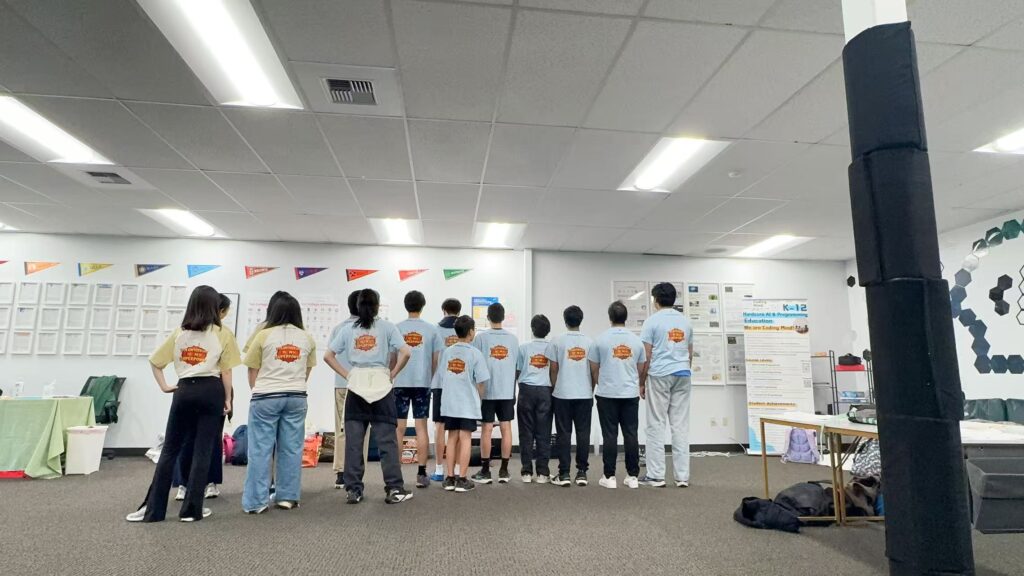
and Teacher Little Red Riding Hood (小红帽), who worked with campers each week to design and print their own summer camp merchandise.
We also thank the many volunteers, parents, friends, instructors, and supporters whose contributions may not always have been visible, but whose generosity made the camp possible.
It Takes a Community
There is a well-known African proverb:
“It takes a village to raise a child.”
The story of CACA STEM & Humanities Summer Camp has shown us something similar: it also takes a community to help young people lead.
Beikun and Oscar are now approaching the end of their terms as co-chairs, and the current teaching team will soon pass the program on to a new generation of student leaders.
But they are leaving behind more than memories.
To help future teams continue what they started, Beikun and Oscar have prepared a summer camp summary and an operations guide documenting the lessons, systems, and experiences developed over the past three years.
That may be one of the most important parts of their work.
A successful student project is meaningful. A student project that can continue after its founders step away is something even more special.
The first CACA STEM & Humanities Summer Camp began in a living room, with nine students, four high school organizers and instructors, a backyard, and a cherry tree.
Three summers later, it has become a community tradition built by dozens of young leaders and supported by families, educators, businesses, volunteers, and friends throughout the community.
As one leadership team prepares to hand the camp to the next, we look forward to seeing where the story goes from here.
We can’t wait to see what Summer 2027 will bring.